
Project Management & Innovation Sprint
A focused, single-destination tool that helps users quickly tailor resumes to job listings.
Project Date: Summer 2025
My Role: Sprint Decider
As the Decider, I guided the team’s direction throughout the sprint by making final calls on key features, concept prioritization, and design direction. I also helped synthesize user insights, contributed to ideation, and shaped the final narrative for our presentation.
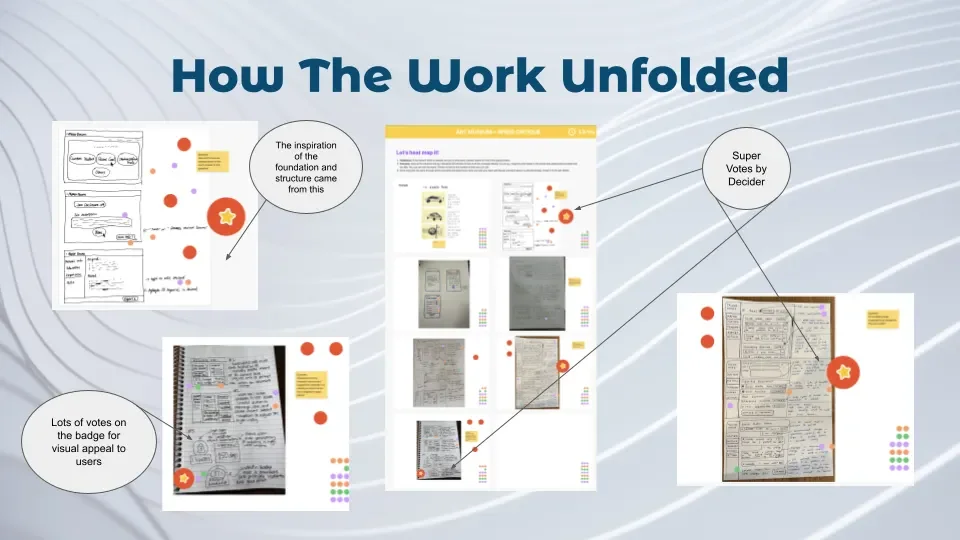
Project Overview: Over the Summer 2025 semester, our sprint team, Mordor, set out to solve a focused challenge: helping job seekers tailor their application materials efficiently, while also making it easier for hiring managers to see how relevant a candidate’s experience is. We designed a resume-tailoring platform that simplifies the customization process through a clean, guided interface. The tool enables users to upload a resume, input a job description, and receive targeted edits that align their qualifications with the job’s requirements. Using FigJam for brainstorming and journey mapping, Figma for prototyping, and a structured sprint methodology, we produced a functional and user-focused product.
The Problem: Job seekers often apply to multiple roles using a single, generic resume, not because they want to, but because tailoring each version is time-consuming, overwhelming, and unclear. As a result, their applications may feel misaligned with job descriptions and fail to highlight the most relevant experience. At the same time, hiring managers are inundated with resumes that don’t clearly articulate how a candidate’s qualifications connect to the role, making it harder to identify strong matches. Through user research and expert interviews, we identified a key opportunity: job seekers need a faster, easier way to tailor resumes without sacrificing quality, and hiring managers need clearer insight into applicant relevance. Our challenge was to create a tool that addresses both of these pain points in a streamlined, user-friendly way.
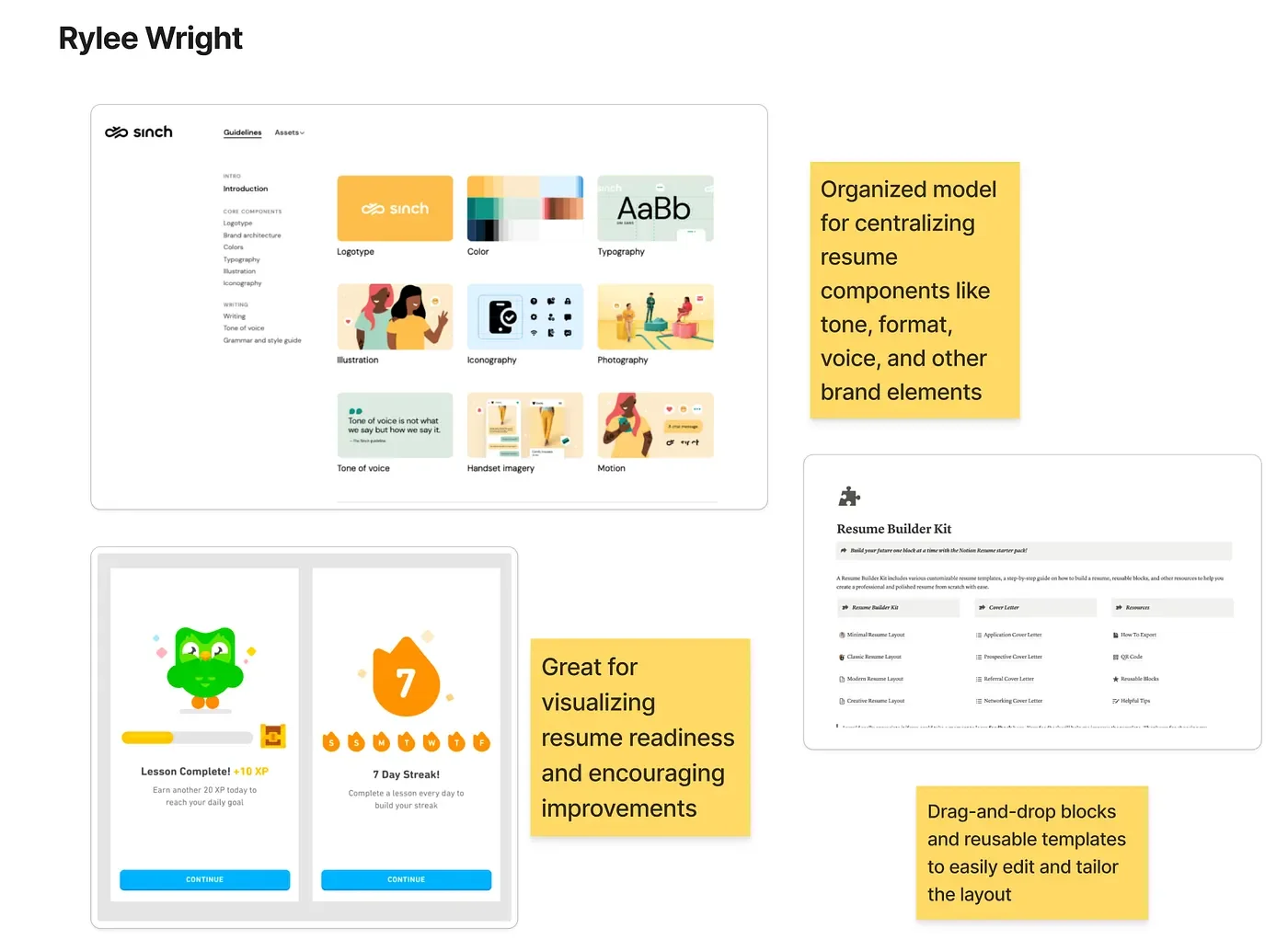
The Solution: To solve both the challenges faced by job seekers and hiring managers, our team developed Tailormade, a resume-tailoring platform designed to make customization intuitive, fast, and impactful. Over the course of the summer semester, we followed a structured sprint methodology that emphasized user-centered design, rapid prototyping, and clear decision-making.
Below are some of the features that we prioritized including in our prototype:
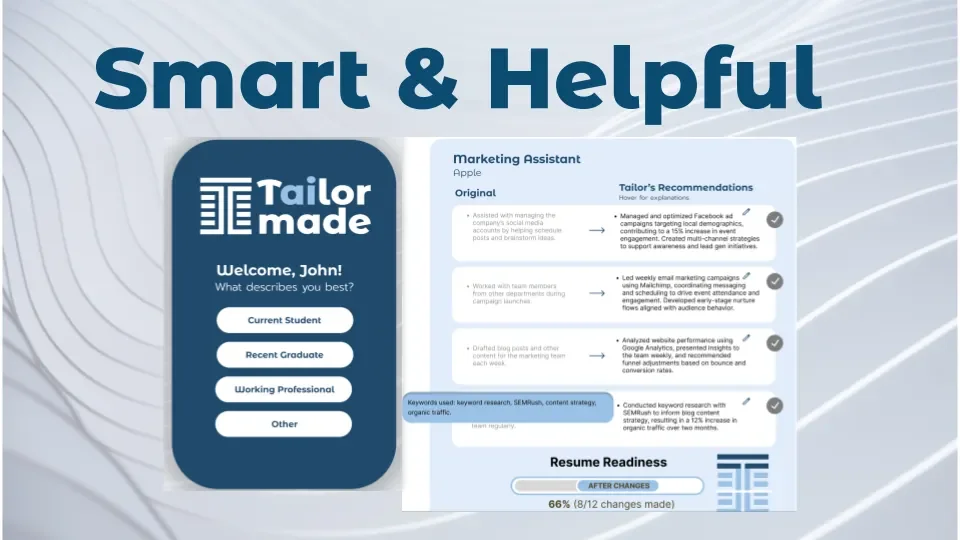
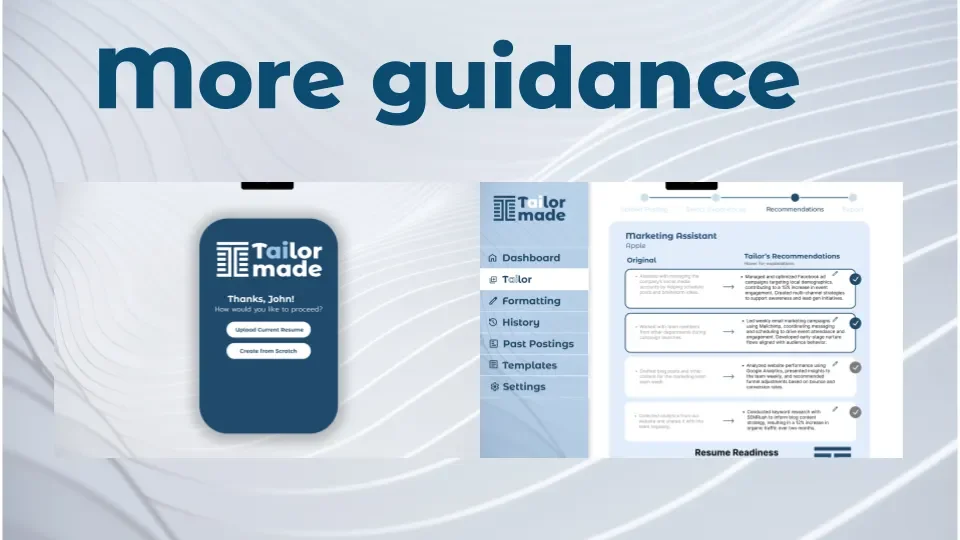
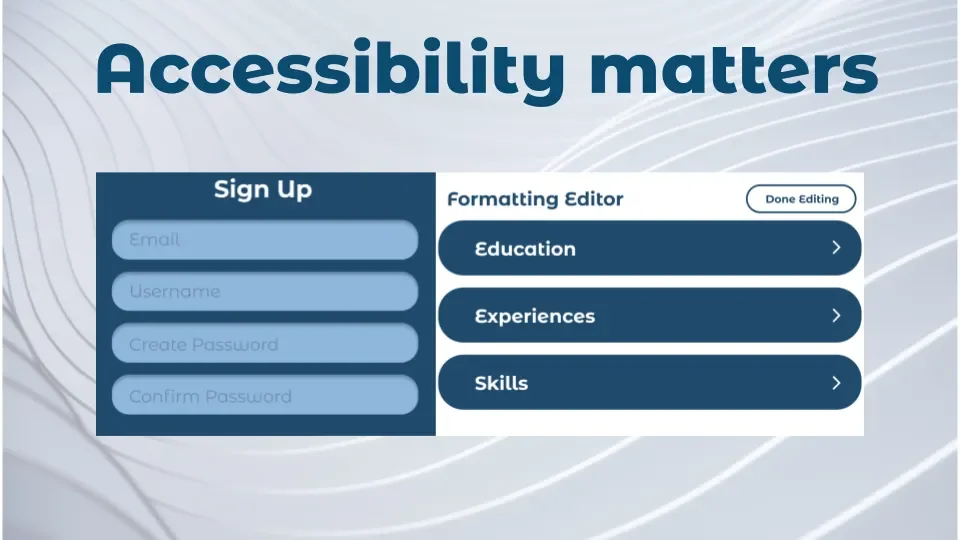
We began by mapping the ideal user flow: uploading an existing resume, pasting a job description, and receiving targeted, context-aware suggestions for revision. From there, we explored existing tools, sketched individual solutions, and collaboratively selected the best ideas to move forward with. As the Sprint Decider, I helped the team prioritize clarity, simplicity, and relevance throughout the interface.
Our prototype, built in Figma, featured a clean dashboard that guides users through each step of tailoring their resume. The platform offers smart comparison tools, showing side-by-side views of the original and updated content, and highlights keyword alignment with the job listing. By visually surfacing these changes, users gain a better understanding of what employers are likely looking for and how to emphasize their most relevant experience.
The final product is a more focused environment designed to give users the confidence that their application is aligned with what hiring managers want to see. From ideation to execution, the process was focused on solving real, specific problems for both applicants and reviewers.
The Results: By the end of the sprint, our team successfully prototyped Tailormade — a focused, user-friendly resume-tailoring platform that streamlines customization without sacrificing quality. Our solution addressed both sides of the problem: job seekers were guided through a clear, efficient tailoring process, and hiring managers could more easily assess candidate relevance. Feedback from user testing and peers highlighted the strength of our interface, the clarity of our flow, and the value of the side-by-side comparison feature. The project demonstrated our ability to solve a real-world problem through thoughtful design, collaboration, and rapid iteration. I am very happy with the final product!
Check out the prototype here!
